
With millions of job seekers actively engaging online, it has become essential for organizations to master the art of advertising job postings online.
At a basic level, posting a job online is a pretty straightforward process. Write a job description, choose a job board, and post it. However, you’ll need to go the extra mile to maximize the number of people who see your posting and fit your candidate persona.
From crafting your candidate persona to selecting the right platforms, we’ll explore practical strategies to ensure your job postings stand out in a saturated job market.
Who Is Your Ideal Candidate?
Knowing your target audience is a must in marketing. Recruitment marketing is no different. To attract the right applicants, you need to understand your ideal candidate by developing a candidate persona.
To do so, you’ll want to imagine the perfect hire for a particular role and then define their corresponding traits.
A few traits that you’ll need to understand include:
- Career Goals
- Background and Experience
- Interests
- Demographics
- Proficiency with Technology
If you have employees in similar roles, start by asking them questions about each of the traits above. LinkedIn can also provide a wealth of knowledge, especially if this is a new position in your organization.
Visit the Jobs section and search for the job title you want to hire. Take note of the background, experience, qualifications, and requirements other organizations seek. Follow that up by searching for people currently in that role and gathering intel from their profiles. Pay special attention to how they describe themselves in the About section and the skills they list under experience.
How To Optimize Your Job Posting
Now that you’ve defined your ideal candidate, you can use that information to develop an effective job description with content that speaks to their interests and values. From there, you’ll need to incorporate relevant keywords and terms for search engine optimization (SEO).
The goal of SEO in this context is to match your job posting to relevant job seekers who have shown the intent to apply.
SEO stands for “search engine optimization.” In simple terms, SEO means improving a website page to increase its visibility in Google, Microsoft Bing, and other search engines.
– Search Engine Land
Conduct Keyword Research for Job Titles & Descriptions
To optimize your job posting, find out what people are typing into search engines to find roles like yours. Tools like Google Keyword Planner, Google Trends, and the search engine itself are a good place to start.
Google Keyword Planner
The Google Keyword Planner is designed for use with Google Ads, but it can provide helpful information when optimizing a job posting, such as which terms and keywords to include.
Let’s say you are looking to hire a recruiter. Type that into the search bar to view a list of related keyword ideas. Next to each keyword, Google will show you the average monthly searches that term receives.
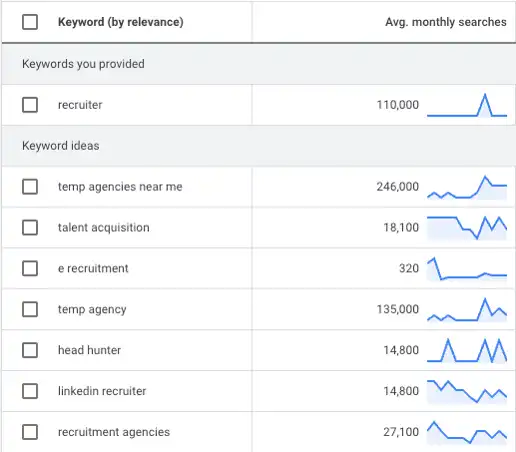
In our example, “temp agency” and “recruitment agency” rank high. If these words were related to your open position, you’d want to include them in the job posting.
Google Trends
Google Trends shows a term’s popularity in searches over time and associated queries, and it allows you to compare terms directly.
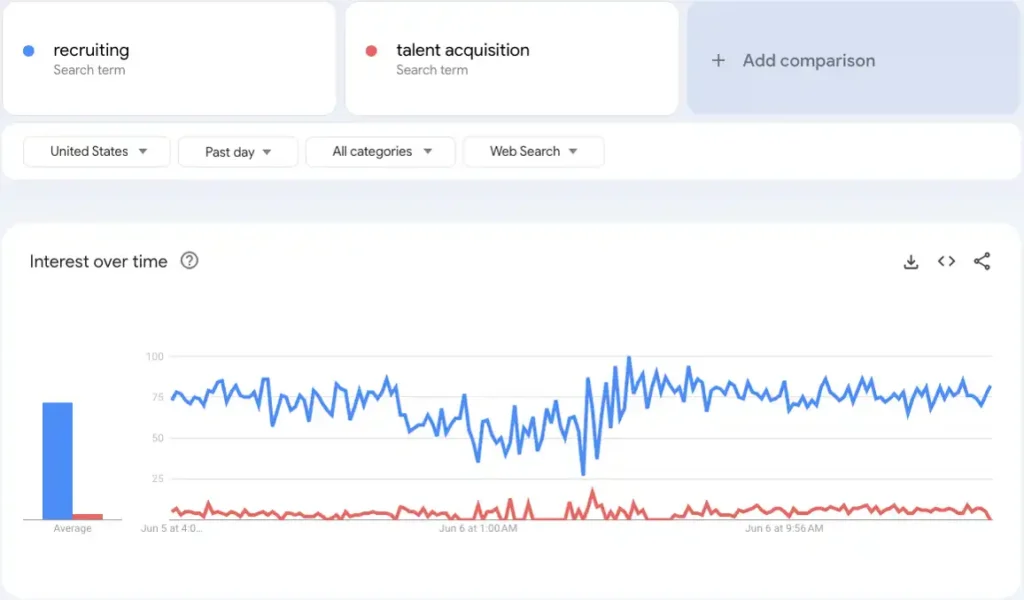
For example, comparing “Recruiting” and “Talent Acquisition”, “Recruiting” consistently outperforms “Talent Acquisition” in search volume. That means you’d want to use “recruiting” more often in your job posting because more people are searching for it.
Search Engines
Search engines like Google and Bing can tell you a lot about what candidates are looking for if you know where to look. The pages ranking at the top for job queries are usually educational or informational; a great place to gather ideas for optimizing your description.
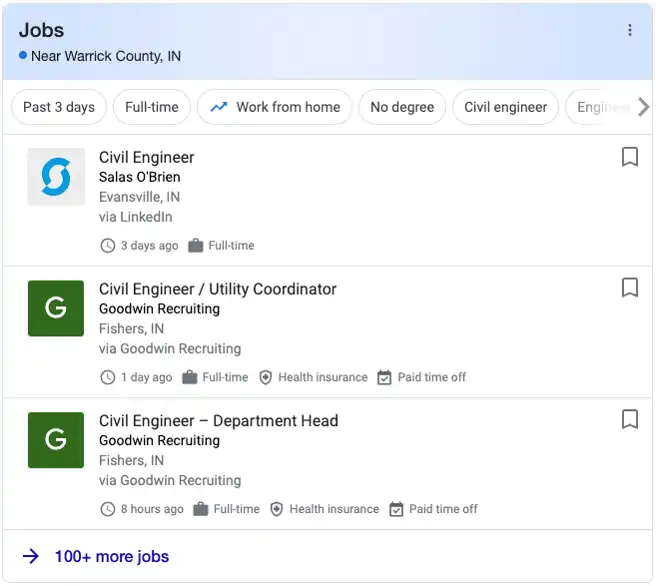
Search engines try to match the searcher’s intent. When you search “civil engineer job,” you’ll likely see jobs at the top of your results. Pay attention to the titles that appear first, it’s always recommended to use standard titles people actually search for rather than internal titles unique to your organization.
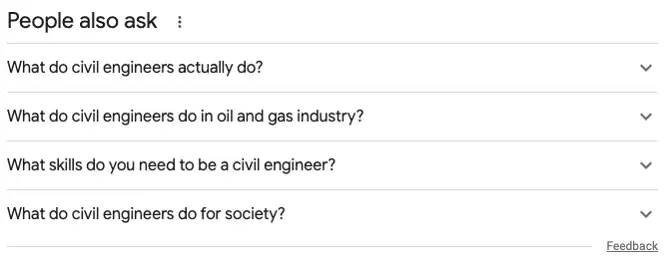
To understand what candidates are asking, look at the “People also ask” section. Using the “civil engineer job” example, the first question that appears is “What do civil engineers actually do?” That’s a question worth answering somewhere in your job posting.
Choosing the Right Place To Advertise Your Job Online
You’ve done your keyword research and created an optimized job posting. Now it’s time to put it in front of the right people. Where you post depends on who you’re hiring.
Where are your candidates searching?
Is this a highly technical or leadership-level position?
- LinkedIn Jobs is likely your best starting point. It offers the reach and relevance needed to connect with experienced professionals. LinkedIn allows organizations to post one job for free, but meaningful visibility requires promotion.
Do you want maximum exposure and are comfortable reviewing a higher volume of applications?
- Sites like Indeed or ZipRecruiter will help you reach a larger candidate pool. Indeed has over 63.4 million monthly users, so strong SEO on your posting is critical to standing out.
Do you want to reach candidates where they already spend time?
- Facebook (Meta), Google, X, or even TikTok can be effective depending on the role and audience. According to Glassdoor, 79% of job applicants use social media in their job search.
Is this a niche role with a limited candidate pool?
- Consider posting on industry-specific job sites. These will have less traffic than Indeed, but the candidate pool will be more focused.
Here are a few niche job sites to consider:
How Much Does It Cost To Advertise a Job Online?
While free options exist on several platforms, most will require some form of payment for meaningful results.
LinkedIn charges per click on a promoted job post. One free posting is available, but promoted placements are needed for real visibility.
Indeed
Indeed charges per applicant, with costs varying by location, job title, and local candidate supply. You can set a custom applicant limit to control spend. Free postings are available but receive limited visibility; sponsored jobs get prominent placement at the top of search results.
Niche Job Sites
Many niche sites offer free postings but lack the volume and features of larger platforms. Engineering.com, for example, offers free job postings with no paid ad option. These work best as a supplement to LinkedIn or Indeed, not a replacement.
Measuring Your Investment
Once your job postings are live, track performance using these key metrics:
- Impressions: How many candidates saw your job ad in their search results?
- Views: How many people clicked through and read the full posting?
- Click-through Rate (CTR): Of everyone who saw your ad, how many clicked? A higher rate means the posting is relevant to the right people.
- Number of Applicants: How many people applied?
- Conversion Rate: Of everyone who viewed the posting, how many applied? A higher rate means the posting is doing its job.
- Applicant Quality: How many applicants actually match the role requirements? A high number means your targeting and copy are working.
- Diversity of Applicants: How many applicants come from diverse backgrounds?
Tracking these metrics over time allows you to make data-driven adjustments and consistently improve the quality and volume of candidates you attract.
Want help building a recruitment marketing strategy that actually works
Hueman Professional Recruitment offers recruitment marketing solutions designed to help growing companies attract the right candidates, at every level. Contact us to start the conversation.